Wallpaper in a humid climate: an honest Thai answer
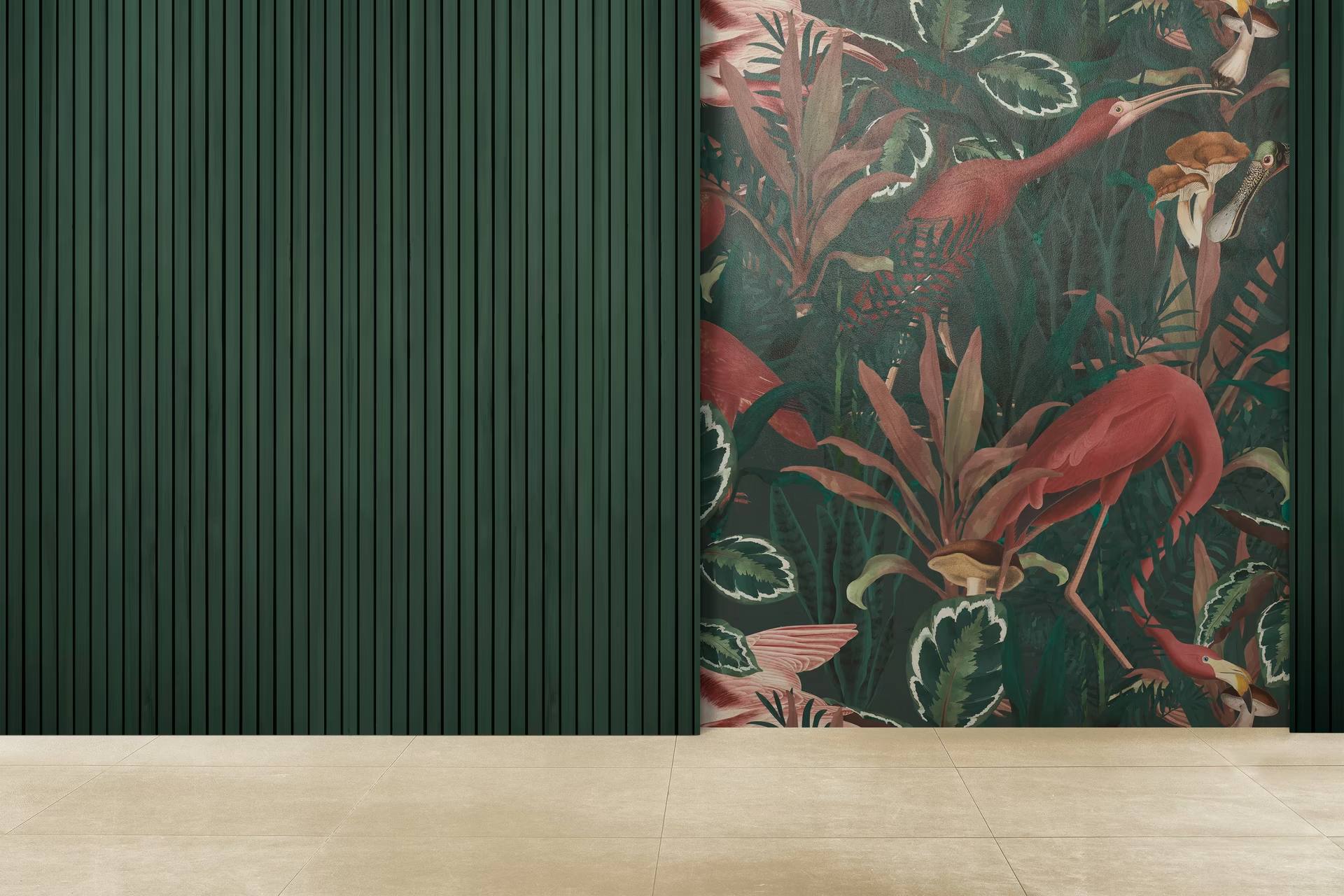
Let's name the fear properly. You've read the forum threads — someone hangs a beautiful mural in their Bangkok condo, and three months later black spots are creeping up from the skirting. So before you fall in love with a design, you want a straight answer: can wallpaper survive a humid climate like Thailand's, or is mould simply the price of living here?
Here's the short version. Wallpaper in Thailand's humidity does fine in most rooms — if you choose the right material and get the wall ready first. The long version is worth five minutes of your time, because the mould horror stories almost never start with the paper.
Why mould really grows behind wallpaper (it's the wall, not the paper)
Mould behind a mural isn't the paper "going bad". It's moisture trapped between the wall and a covering that won't let it out. The moisture got there some other way — a slow leak, damp rising from below, or condensation forming on a wall that stays cool while the humid air outside stays warm. Air conditioning, ironically, can help create that last one: the aircon cycles on and off, the wall cools, and warm moist air condenses against it like the outside of a cold glass.
Hang any covering over a wall like that and you've built a little greenhouse. The wallpaper isn't the culprit; it's just hiding the crime scene.
This is also why "waterproof wallpaper" is a phrase to treat with suspicion. A waterproof face protects the surface from splashes and wiping — genuinely useful — but it cannot fix a damp wall. Nothing you hang on a wall can.
The 60 per cent rule (Bangkok humidity vs an air-conditioned condo)
Bangkok's relative humidity runs roughly 70 to 80 per cent year-round, peaking around September at the height of the rainy season. That sounds like a death sentence for anything paper-shaped, until you remember one thing: your wall doesn't live outside.
Mould needs sustained indoor humidity above roughly 60 per cent to get comfortable — that's the threshold environmental health guidance keeps coming back to. A room you cool regularly spends most of its life below that line. Which means the single biggest thing protecting your mural isn't the mural at all. It's the aircon or dehumidifier you were probably going to run anyway.
So the question isn't really "is Thailand too humid for wallpaper" — it's "does this particular room stay reasonably dry". A bedroom you sleep in with the aircon on: yes. A store room that's shut up and sweating through October: be honest with yourself.
Choosing a material for a humid room
Materials handle moisture differently, and the differences matter more here than they would in, say, Norway. Three sensible paths:
- Premium Vinyl — a durable, wipeable matte that suits almost any room. Vinyl sheds water on its face, so condensation, sticky fingers and the odd splash wipe straight off. The trade-off: it doesn't let moisture in the wall escape, so the wall underneath needs to be properly dry before it goes up.
- Fabric Backed — a non-woven base that breathes. Water vapour can pass through it rather than pooling behind, which makes it a forgiving choice for a humid climate, and it removes cleanly when you're done with it.
- Vinyl Sticker — peel-and-stick and fully removable, which is why renters love it. If the wall ever needs attention, it comes off without drama and without a conversation about your deposit.
None of these is a magic anti-mould shield — no honest wallpaper is — but matched to the right room, each one does its job well. Every material is priced openly by the square metre, and the live rate for each one sits on the materials page. Better still, samples are always free, so you can hold each finish in your own humid air before deciding.
Get the wall ready first
If there's one section to screenshot, it's this one. A mural is only as healthy as the wall behind it, so before anything goes up:
- Find and fix the moisture source. A leak, a dodgy window seal, damp from the bathroom next door — solve it first, or any covering will simply hide it.
- Remove old mould completely. Clean it off properly; don't just paint over the spots and hope.
- Prime with an anti-mould primer. It's a small extra step that buys real peace of mind.
- Let the wall dry fully. Never hang on a wall that's actively damp. Patience here is the whole game.
Once the wall's sound, the hanging itself is the easy part — every mural arrives as numbered panels with a step-by-step guide, printed to your exact wall size in centimetres, and there's an optional professional installation add-on at checkout if you'd rather watch someone else do it. The whole process, measuring to hanging, is laid out in how it works.
The honest room-by-room answer
Bedrooms and living rooms: yes, happily. These are air-conditioned, low-splash rooms — exactly where a mural belongs. A floor-to-ceiling botanical like Wild Fern Garden behind the bed, or something soft and open like Misty Mountains in the living room, will live a long and uneventful life there. Home offices and hallways: also fine.
Bathrooms and wet kitchens: honestly, no. Daily steam and direct splash are more than any paper mural should be asked to endure, and we'd rather tell you that now than have you scrubbing a corner in six months.
Tiled or glass surfaces: there's a proper answer. Our Ultra Clear Sticker is a self-adhesive film made for glass, tile and ultra-flat walls — the honest option for a kitchen splashback-adjacent wall or a tiled stretch. Even then, keep it to the drier zones and out of the direct line of fire. Managed expectations make for happier walls.
Questions we hear a lot
Will my mural really go mouldy after three months?
Not if the wall was dry when it went up and the room stays reasonably cool and dry. The three-month stories almost always trace back to a wall that already had a moisture problem — the mural just revealed it on a schedule.
Can I put a mural in my bathroom?
A paper mural, no — steam wins that fight every time. If you're set on the room, the Ultra Clear Sticker on tile or glass, away from the shower's reach, is the honest compromise.
I'm renting. Can I take it down without losing my deposit?
Yes — the Vinyl Sticker peels off cleanly, and Fabric Backed removes cleanly too. Your landlord need never know the wall had a more interesting life.
My wall had mould before. Can I ever hang wallpaper on it?
You can, once the cause is fixed, the old mould is removed, the wall is primed with an anti-mould primer, and it has dried fully. On a wall with that history, the breathable Fabric Backed is the considerate choice.
The humidity, in other words, is manageable — it's the unexamined wall that isn't. If a room in your home has been waiting for something better than beige, order a set of free samples, or take thirty seconds to see a design on your own wall before you commit to anything. The wall's been patient this long; it can wait for you to do it properly.